


In The Spotlight

Sherif Foda, CEO, NESR. (Image source: NESR)
NESR’s strong local presence as a national home-grown energy services provider has enabled it to weather the challenges posed by the current crisis in the Middle East, while others have floundered
Speaking to Oil Review Middle East at the Energy Intelligence Forum in London, where energy security and energy resilience were at the top of the agenda, NESR’s CEO Sherif Foda explained how right at the beginning of hostilities the company had put plans into action through its crisis management team to ensure business continuity and prepare for any possible disruption.
“What helped us a lot is that we have built a very strong and competent local workforce so we don’t need to rely on expatriates to come in to execute the jobs. The other aspect is to ensure you have the products you need to operate. We shipped everything we needed immediately, in some cases taking a conscious decision to air freight or incur more costs to be able to have ready equipment, people and products in country in case of conflict. So we actually grew during the conflict despite those challenges.
Foda cited the Jafurah unconventional gas project in Saudi Arabia as a case illustrating supply chain resilience.
“We worked with our technology partners and suppliers to ensure we can blend the surfactants in country, for example. We have sourced most of our needs locally, such as the pipes, infrastructure, and sand, with some of the products made in Saudi Arabia. As a result of that resilience, we continued with our frac performance in unconventional without disruption, and are marching ahead as we speak and into the coming months. No one would have believed 10 years ago that Saudi Arabia would have a competitive play that rivals the Permian or Delaware. Today it is second to none, a world-class unconventional play, developed with the latest technology and 100% local crew. So there has been no need to evacuate workers, giving us a competitive advantage.
“So we are growing our projects despite what’s happening in the region.” Indeed, NESR saw second quarter revenues grow 59% year on year, with a tripling of net income, as the company was able to execute all its contracts and maintain a presence in all operating units, with no interruption to any of its customer activities.
Logistics has been the biggest hurdle posed by the crisis by far, Foda said. “Logistics has been very, very complex. We planned the logistics at an early stage, deciding to truck goods from Jeddah to Dammam rather than going through the Strait, at considerable cost.”
Opportunities throughout the region
Discussing the company’s growth plans, Foda said he sees strong opportunities throughout the region.
“We see fantastic growth in the UAE and Kuwait, and we’ve been increasing our footprint and business in Saudi Arabia,” he says. In Kuwait, NESR in August announced multiple contracts totalling US$300mn over five years, including an agreement to establish a research centre that will focus on several challenge-specific innovations in multiple disciplines across upstream, sustainability, and unconventional resources. NESR will pioneer innovation and bring best-in-class technologies from around the world, tailoring them to the upstream ecosystem in Kuwait. While back in March the company announced it had secured US$300mn worth of cementing contracts in Kuwait and North Africa.
“North Africa has enormous potential because of its gas, offering the scope to replace Russian gas supplies to Europe,” Foda says. “Then you have what they call the new frontier – Syria has come back, Iraq post-conflict will offer a lot of opportunity.
“That is why the region offers so much, and it’s a very unique opportunity for a company like us, because you need to be very locally established. The current situation has shown that is cost prohibitive to employ expatriates, who come and go. You have to be locally made, homegrown, while conforming to or surpassing the top international standards.”
Others should be building local capacity, as NESR is, he said, while conceding that certain products will still need to be imported or locally assembled. “You’re not going to be able to build a high-pressure wellhead in every country. It won’t be cost competitive. But for the products that are used a lot, the main components of those items should be sourced locally. The local structure also has to be done extremely well.”
Decarbonisation technology potential
NESR has always had a strong ESG focus. Discussing decarbonisisation, Foda said this is not seen as the flavour of the day right now due not only to the conflict but also due to the stance of the US administration.
“But it will come back; it is a must. We cannot as an industry continue to produce oil and gas with the same level of emissions, especially as demand is increasing. We need to eliminate emissions as far as possible. ESG is a good business path. And as the CEO of Aramco has said, this region produces oil and gas at the lowest cost with the lowest emissions. That means projects will happen.” He added that now is a good time to invest counter-cyclically in ESG and decarbonisation technology, as NESR is doing, as there are companies with very good technologies that are currently available at a low cost due to lack of demand. “It is a very good opportunity to invest and make acquisitions to get ready with your portfolio of decarbonisation implementation technology.”
NESR is spearheading environmental innovation on multiple fronts, deploying technologies across water management, flare elimination, emissions detection, heat capture, and energy transition (CCUS & Hydrogen) and now pushing into minerals for the energy transition, recently signing an agreement with Aramco for the region’s first direct lithium extraction (DLE) project.
Foda sees the greatest potential for technology breakthrough in decarbonisation, in particular addressing the economics of decarbonisation. For example if recycling produced water were made economically viable, it would be much more widely practiced. “We need to break through the economics of materials, for example DLE technology to extract lithium,” he said.
At ADIPEC, NESR will be focusing on unconventional development and minerals, such as rare earth minerals. “We have a very cool technology we want to present at ADIPEC,” Foda said. Watch this space!
Concluding, Foda declared himself “super positive” about the future, seeing “the post-conflict box of opportunity”.

The recent European Norm 17975 addresses ‘grey zone’ energy-related risks during machine and pipeline interventions and proposes a task based framework for safe and efficient work. The norm can further increase the safety and efficiency of Lockout/Tagout programmes in a wide range of industries
A task based safety framework
10%-15% of fatal workplace accidents in Europe’s industries are related to maintenance operations according to data from the European Agency for Safety and Health at Work. Many of these result from underestimating risks involved in specific tasks such as machine greasing, sensor adjustment or a quick cleaning that are not always seen as ‘maintenance activities’. They are kept outside the scope of Lockout/Tagout programmes even though workers are exposed to similar risks. European Norm (EN) 17975 addresses these grey zone risks by using task based risk analyses as a starting point.
“EN 17975 does not require an energy zero state for every machine or pipeline during every intervention”, said Mustafa Ekseri, EMEA Safety Engineer at Brady Corporation, a supplier of quality Lockout/Tagout solutions.
“Not having to halt an entire production line for every intervention can save valuable time - if it is possible in a safe way. To achieve this, EN 17975 proposes a layered approach based on risks related to specific tasks on specific machines and pipes. These risks are to be highlighted in a risk analysis. In absence of a risk analysis, machine zero energy states remain the safety standard. In that sense, EN 17975 builds on ISO 14118 by providing more options for compliance with European workplace safety legislation. Impacted activities can be defined using EN 17007 and EN 13306 and are also listed in EN 17975.”
Risk analysis guidance
With machine and pipe intervention safety hinging on identified risks, industries will need thorough task-based risk analyses. Guidance can be found in other standards. “ISO 12100, primarily intended for machinebuilders to take into account their customers’ workplace safety, can be used as a basis for machine intervention risk analyses. ISO 31000 provides guidelines for managing risk in general, including 8 core principles, a framework and a process.”
“EN 17975 proposes 6 steps to analyse the risk in any machine intervention task, starting with the identification of the task, all the way to a feedback loop for continuous improvement. That includes a thorough energy source inventory and identification. The standard also requires a risk analysis update before applying Standard Operating Procedures, and during maintenance activities. In addition, EN 17975 advocates clearly identified degraded situations that may deviate from the standard risk assessment.”
Task-based isolation
 EN 17975 uses a task based risk approach that was captured earlier in the French norm X60-400. Based on a task risk analysis, the European Norm proposes four types of risk control processes:
- Neutralisation: a process that, through design of the control systems, shuts down an item of equipment so that a list of predetermined tasks can be conducted in safety.
- Standard isolation: a process that results in the removal – by locking in position a single or double isolating device – of all energies & fluids where the presence, accidental retention, unexpected appearance does not have hazardous consequences for workers, the environment, and items.
- Reinforced isolation: a process that results in the removal – by separation or by a combination of isolating and opening devices (e.g. valve, tap, etc.) – of all energies & fluids where the presence, accidental retention, unintended appearance does not have hazardous consequences for workers, the environment, and items.
- Specific provisions: a process that results in the implementation of organisational or technical measures enabling observation, diagnostics, testing activities and work on settings for the item in service to be carried out safely, with energies & fluids present.
“All four risk control processes require an inventory of energies and fluids per machine with their effects on people, property and the environment, a mapping of the isolating devices and an identification sheet of energies, fluids, components and lockout devices. It also requires a shared risk assessment grid and process. EN 17975 describes the aim, application conditions, type of activities and other relevant factors for each of the 4 risk control processes.”
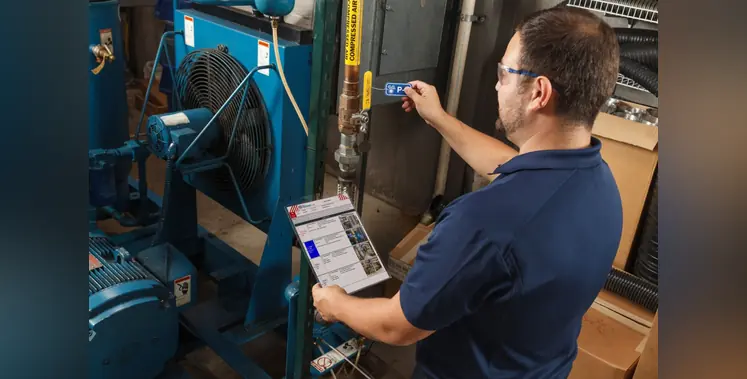
Lockout/Tagout guidance
Complying with EN 17975 requires a human, organisational and technical approach, all of which are outlined in the norm.
EN 17975 identifies 9 steps to carry out reinforced and standard isolations by Lockout/Tagout of energies and fluids. Steps involve separation of energies and fluids, isolation, lock out, tagout, identification, dispersion of energies, check, contain and inspect. “The ‘check’ step in EN17975 is already widely known in the industry as the ‘Tryout’ in Lockout/Tagout/Tryout or LoToTo. It is a vital step to help make sure that measures are implemented correctly and that they are still effective.”
“Brady safety engineers can help industries implement isolations by writing machine- and task specific lockout procedures. These can include all nine steps from EN 17975, and they must be based on company task risk assessments. In addition, we can offer the right Lockout/Tagout tools for procedure compliance, set up a hands-on demo by locking out a specific machine, and provide training to relevant employees. Alternatively, a gap analysis can be made that identifies steps to be taken from the current state to arrive at compliant, best practice Lockout/Tagout.”
Impact on existing safety programmes
EN 17975 is not a legal requirement. “The standard however considerably facilitates compliance with EU workplace safety legislation. It sets a clear expectation for any machine intervention: if no risk analysis for the task is available, a machine zero energy state is required.”
“Because many safety programmes already involve complete machine isolation from every energy source, for every task, it is likely that the new norm will impact existing Lockout/Tagout-programmes. Based on the risk analysis, machine zero energy states may not be needed for every type of intervention.”
“Adversely, some tasks that were considered ‘small and safe’ may unveil more risk after a thorough risk analysis. This means a single machine could have several Lockout/Tagout procedures. The right procedure can be included with, or communicated via a QR-code on a work permit for example.”
“Some forms of automated safety may not be sufficient for every task without an underlying risk analysis. Take a safety cage for example, equipped with sensors that deactivate moving machine parts the moment someone enters the cage. Do these nullify any residual energy that may pose a risk? Is gravitational, and other potential energy taken into account? The goal of EN 17975 is to prevent accidents, and to avoid a false sense of safety that does not provide any real protection.”
With the European Norm 17975, industries in Europe can now rely on a common standard for compliance with EU and national safety legislation that involve risk control processes of energies and fluids in maintenance activities.
Get the Brady EN 17975 Lockout/Tagout webinar recording
Go from zero machine energy to zero intervention risk with task based Lockout/Tagout, driven by the European Norm 17975. Get your copy of the EN 17975 webinar from an experienced, worldwide Lockout/Tagout solution provider.
Discover more about:
- the unique European framework EN 17975 provides to achieve safety and efficiency
- how EN 17975 focuses on task-based safety, rather than machine zero energy states
- how EN 17975 can be used to address ‘Grey zone’ risks
- Four risk-based energy isolation levels presented by EN 17975
- Six steps to control risks
- Lockout/Tagout procedure writing
- Lockout/Tagout device and padlock types
Get the webinar recording now >
Draw inspiration from our free guidebook on how to best implement Lockout/Tagout. . Download the free guide >
BRADY Middle East
 Mustafa Ekseri works as a Safety Engineer for Brady Europe, Middle East and Africa. He is involved in planning, writing procedures and rolling out Lockout/Tagout programmes at manufacturing and logistics workplaces throughout Europe. He is a Prevention Advisor Level 2, a Belgian legally regulated curriculum that equips professionals to handle safety and health risks in businesses.

Nayef Bou Chaaya, vice president, Middle East, Turkey & Central Asia, AVEVA.
The Strait of Hormuz crisis shows how vulnerable the supply chain is to geopolitics, making agility and resilience impossible to ignore, writes Nayef Bou Chaaya, vice president, Middle East, Turkey & Central Asia at AVEVA
The oil industry began the year determined to boost crude production to cover a looming global supply-demand gap. Yet on February 28, that challenge became far more acute than anyone could have predicted.
The onset of the US-Israel-Iran war and the ensuing Strait of Hormuz crisis has completely changed the mood inside the oil industry. The world is facing prolonged higher-for-longer oil prices where every barrel suddenly matters more, and every operational inefficiency starts eating directly into profits.
At the peak of the disruption, the market was dealing with the loss of around 12 million barrels per day of crude supply, according to Rystad Energy. That is roughly 11% of total global oil demand. On an annualized basis, it equates to more than four billion barrels of supply either trapped, delayed or prevented from reaching the market efficiently.
Oil prices had jumped from around USUS$80 per barrel before the conflict to above US$100. Some analysts project prices could still edge to $180 by the end of the year. That has created a rare profit window for producers outside the Middle East, who are trying to strike while the iron is hot and get as much as possible out of existing infrastructure while conditions remain favourable.
This is not just about drilling more wells
As time is of the essence – both for countries keen to get more supply and for oil majors who want to make the most of high prices – the focus is now on optimising every drop.
Small improvements in uptime, throughput or refinery performance that might once have had limited commercial impact can now translate into millions of dollars in additional revenue. A compressor failure or unplanned shutdown that was once a routine maintenance headache is now enormously costly.
This is where predictive analytics can have an outsized impact, enabling producers to constantly monitor assets and catch problems before they escalate into equipment failure or shutdowns. The current geopolitical environment has only turbocharged this shift, accelerating the move towards industrial AI and integrated operational systems across the sector.
Rystad Energy estimates AI and digital technologies will create close to US$500 billion in cumulative value for exploration and production (E&P) companies between 2026 and 2030.
Not all crude is equal
Refiners are also dealing with another major challenge: crude availability has become much more unpredictable.
Refineries use blends and slates sourced from multiple regions, which all have different properties and refining characteristics. Texas crude behaves differently from Saudi crude. Saudi crude behaves differently from Abu Dhabi crude. Venezuelan crude behaves differently again.
In stable market conditions, those crude slates are relatively predictable. However, refiners are now forced to change their crude oil slate because certain crude streams are no longer accessible. This creates a much more complicated optimisation problem.
Historically, engineering teams would run a limited number of operational scenarios manually. Now industrial AI systems can run thousands of crude blend combinations simultaneously while incorporating crude prices, refined product prices, electricity costs, operational constraints and regional market demand – determining in near real-time exactly which combination will generate the highest profitability possible.
AI augments human strategy
Importantly, the industry is not treating AI as some magical black box replacing engineering expertise. Inside oil and gas, there is still a very strong understanding that AI is only as good as the underlying engineering models feeding it.
AI is extremely good at interpreting data, however, the actual engineering calculations still need to come from first-principles engineering models and thermodynamics.
I like to use a comparative aviation analogy. For example, let’s say passengers boarded a plane and someone announced that AI would be flying the entire flight. Most people would probably get off right away.
Yet, modern aviation already relies heavily on automation. Pilots still handle take-off, landing, direction, speed and oversight while automated systems manage most of the journey in between. Industrial AI is evolving in a similar manner.
Human operators still define objectives, constraints and desired outcomes while AI handles huge amounts of analytical work and scenario modelling faster than humans can manually. This practice matters in a conservative industry where operational mistakes carry enormous financial and safety consequences.
Counting the cost
Production accounting systems are also becoming strategically more important because relatively small discrepancies in incoming or outgoing shipments can seriously affect margins when oil prices are high. If a company purchases one million barrels but only receives 990,000, the financial implications suddenly become much more significant.
In sum, what this all means is that the market is increasingly rewarding operational integration as much as production scale.
While longer term, the industry will continue investing in energy diversification, right now the challenge is more immediate: keeping the world moving during one of the most volatile commodity environments in decades – and making every barrel count.
No one knows when this window will close – or when the next one will open.

Amin. H. Nasser, president and CEO of Aramco. (Image source: Aramco)
At the Energy Intelligence Forum in London, where energy security and energy resilience was at the top of the agenda, Aramco’s CEO Amin H. Nasser underlined the critical importance of Middle East oil and gas supplies, the need for deeper resilience, and why energy resilience and energy security should be a shared responsibility between producers and consumers
The disruption to flows through the Strait of Hormuz has exposed how deeply energy security, economic security, and geopolitical events are connected, Nasser commented.
He noted that at the beginning of the crisis there were almost 10bn barrels of global oil stocks, since when nearly 3bn barrels of gross oil supply has been lost – around half the crude and products that would normally have moved through the Strait of Hormuz over the same period.
“Existing buffers have cushioned the blow and bought time, but they are finite. And while the squeeze on crude is serious, refined fuel prices have risen even more sharply.
“Emergency reserves might buy us a winter. They cannot fix long-term supply.
“Until Hormuz fully re-opens and confidence returns, the crude reality is that pressure at both ends of the barrel will intensify.”
Replenishing inventories while meeting demand could take up to two years, he added. The supply resilience cushion is “scarily thin.”
“The world has been reminded that no energy source, route, or system is risk-free. This crisis has raised the risk baseline. And that higher risk must be matched by deeper resilience, built across multiple layers.”
Deeper resilience
This is exemplified in Aramco’s resilience approach, which includes separating critical facilities; building in backup equipment; planning for maintenance; emergency command and firefighting excellence; rapid damage assessment; restoring damaged infrastructure at pace and investing in its people.
Reducing dependence on chokepoints is also important. Aramco is studying additional routes for crude exports, while exploring more overseas storage to help cover short-term disruptions.
Emphasising the critical importance of Middle East oil and gas supplies, Nasser highlighted the need to re-assess oil policies to ensure they remain aligned with the strategic goal of long-term energy security.
“Because energy security and resilience is a shared responsibility between producers and consumers,” he stressed. “This crisis is much more than an energy supply shock in Hormuz,” he added, citing the attacks on facilities and shipping.
“The international community must stand together to safeguard the free flow of energy and goods.”
Oil and gas infrastructure is a “collective necessity for producers and consumers alike,” he said, urging collaboration to minimise and adapt to shocks.
“We can collaborate on emergency response; better supply planning; refinery and petrochemicals flexibility; joint stockpiling; and long-term relationships. And stronger finances, supply chains, and cybersecurity are a must. “
Nasser concluded with a plea to “end the era of cyclical under-investment”, highlighting the integral importance of resilience.
“This crisis has finally exposed the false choice between energy security, affordability and sustainability.
“They are inseparable, and the future energy system must be built on all three. Middle East oil and gas remain central to that system for decades to come. Strengthening the resilience of these vital supplies is therefore a global strategic necessity."

Kuwait is developing its offshore discoveries. (Image source: Adobe Stock)
Kuwait Petroleum Corporation (KPC) is pushing ahead with its strategic expansion plans undeterred despite the crisis in the Middle East, its deputy chairman and CEO Shaikh Nawaf S.Al-Sabah assured delegates at the Energy Intelligence Forum in London
"We have not stopped, slowed down or even thought again about any of our strategic plans," Shaikh Al-Sabah said, confirming that KPC remains on track to deliver its target of increasing production capacity to 4mn bpd by 2035, and to increase domestic gas production to 2mn scf/d by 2040.
“We’re investing US$9-10bn a year in capex to reach those two targets; we’ll continue to make these investments and grow internationally throughout this process,” he said. “We are doing this because we recognise that it is our hydrocarbons that will be most in demand a decade from now, and two decades from now, in fact for the rest of our lifetimes.”
He added that the two major projects announced just before the beginning of hostilities are also going ahead as planned. Project Peregrine, which involves the lease and leaseback of existing pipelines in Kuwait, will finance future growth. Investors remain fully committed to the project, he said, and definitive agreements were signed in July.
“We were able to execute on time, on target with valuations that were higher than we expected before the war started, and at a cost less that any preceding transaction in the region of a similar scope, so we ended up with US$7.85bn in new foreign investment in the pipeline network.” This was because investors from around the world recognised the resilience in Kuwait and took a long-term view, he said.
The other project announced is Project Seef, which will develop three massive offshore discoveries made over the past two years, together containing over 3bn bbl of oil in recoverable reserves. Noting that all Kuwait’s production to date has been onshore, he pointed out that this achievement in getting a 100% exploration success, given that three wells drilled had resulted in three major discoveries. Subsequent wells have been drilled with further discoveries made, which have not yet been officially announced.
“We are asking international oil companies to partner with us to develop those resources under an operating services contract. So we’re moving ahead according to the exact same schedule that we had put together even before the war began.
“It is that type of resilience that really reflects how Kuwait and KPC are looking at this crisis and planning for the future,” he said.
Proving resilient
Discussing the company’s resilience, Shaikh Al-Sabah drew parallels with the destruction of Kuwait’s oilfields at the time of the Iraqi invasion and occupation of Kuwait in 1991, when it had been able to bring production back relatively quickly because of the resilience of its people and its reservoirs, as well as the strength of its international partnerships. Kuwait and its GCC neighbours had demonstrated resilience in the face of the current attacks by planning in advance for such a scenario.
However, he said that while storage buffers and alternative pipeline routes that had been put in place had contributed to this resilience, these buffers are evaporating and “none of these is a replacement for free navigation to the Strait of Hormuz …ultimately the resilience of the international system can only hold up for so long.”
Kuwait had responded to the crisis by slowly reducing production from 2.6mn bpd to a level sufficient to serve Kuwait’s domestic demands, when it was unable to export, and then when it had been able to restart exports by using its own internal tanker fleet, building production back up again to current level of around 2mn bpd.
“We have the capacity to go back up to our current maximum sustainable capacity of 3mn bpd, if we have the export routes available, and this comes down to the ability to move oil through the Strait,” Al-Sabah said. “We have been doing that by using our strategic tanker fleet.” He acknowledged the contribution of Kuwait’s customers, who had brought their own tankers in to support Kuwait’s operations.
Al Sabah noted that while there is an abundance of crude, there is a shortage of product, as there is no way to transport it from refineries, except through shipping, which is heavily restricted. Distillate prices are sky high, as are refinery margins. What is needed in the future is to move product out of the Gulf to get refineries to full production. Kuwait is cooperating with its neighbours on transport options. KPC is also leveraging its investments in refineries outside Kuwait and shipping as much crude as it can to those refineries, growing associated storage to make them even more resilient against any future. It is also building out its storage capacity in Kuwait itself.
“We have to be completely self-reliant,” Shaikh Al-Sabah said.
Echoing the remarks of Aramco CEO Amin H Nasser earlier, he urged an international response to the crisis, bringing producers and consumers together. “This isn’t a crisis that can be borne only by the producers, that we have to build more pipelines. The response has to be inclusive of consuming countries as well.”

SafeStart is a proven, human factors-based safety programme used worldwide to help organisations reduce injuries and incidents by addressing human error, critical risk exposure and decision-making challenges.
Did you know that human factors and critical errors are behind 95% of unintentional injuries?
Join one of SafeStart’s two-day Trainer Certification Level 1 courses coming to the Middle East this October and November and learn how to deliver proven Human Factors and Critical Error Reduction techniques within your organisation. Find out how the SafeStart approach can reduce workplace accidents, strengthen safety performance and build a sustainable culture of safety excellence.
Designed for HSE and safety professionals, this globally-recognised certification equips participants with practical tools, real-world insights and expert guidance to address human factors, reduce risk exposure and influence safer decisions.
Where are the courses being held?
Course details and registration links are as follows:
Dammam 6-7 October :
https://events.offsnet.com/SafeStartTrainerCertificationLevel1CourseDammamKSA-6-7Oct
Riyadh: 27-28 October:
https://events.offsnet.com/SafeStartTrainerCertificationLevel1CourseRiyadhKSA-27-28October
Dubai: 10-11 November:
https://events.offsnet.com/SafeStartTrainerCertificationLevel1CourseDubaiUAE-10-11-November
What is SafeStart?
SafeStart is a proven, human factors-based safety programme used worldwide to help organisations reduce injuries and incidents by addressing human error, critical risk exposure and decision-making challenges. It is being used in 76 countries and over 5,000,000 people have been trained at 10,000+ worksites. It is currently available in 33 languages and average injury reductions are 50% in the first two years and 80% over four years.
This Level 1 certification will guide you through SafeStart’s six-step process, enabling participants to influence safer behaviours and support long-term cultural change across their organisation. Lead safety transformation.
The interactive session will highlight key paradigm shifts and ensure personalised experience for participants.
There will be introduction to the concepts of states and errors, three types of at-risk behaviour, three sources of unexpected events, the personal risk pyramid, and four critical error reduction techniques. The session will also explore long-term strategies and recommendations for bringing in change as well as sustaining it.
By attending, you will:
• Earn your SafeStart certification
• Learn how to apply SafeStart’s human factors approach in real-world environments
• Gain practical tools to influence safer decisions
• Strengthen your organisation’s long-term safety performance
Complete the course, earn your certification and bring these techniques back to your teams to improve safety, quality and operational performance.
Who should attend?
Ideal for: HSE/EHS managers, safety leaders, operations managers, site managers and internal trainers.
About the trainers
The sessions will be led by expert trainers from Safestart International, namely Larry Wilson, author and founder; Sarah Stoker, development director; Anmol Tiwari, territory sales manager, MENA.
Larry Wilson is a pioneer in the area of Human Factors in safety. He has been a safety consultant for over 25 years and has worked on-site with hundreds of companies worldwide. He is the author of numerous books and an active keynote speaker at health and safety conferences around the globe.
Book your place now!
Dammam 6-7 October :
https://events.offsnet.com/SafeStartTrainerCertificationLevel1CourseDammamKSA-6-7Oct
Riyadh: 27-28 October:
https://events.offsnet.com/SafeStartTrainerCertificationLevel1CourseRiyadhKSA-27-28October
Dubai: 10-11 November:
https://events.offsnet.com/SafeStartTrainerCertificationLevel1CourseDubaiUAE-10-11-November

The initiative will help asset-intensive sectors move beyond their legacy tech systems towards AI-embedded operations. (image source: Adobe Stock)
IFS, the leading provider of industrial AI and enterprise cloud software, is growing its footprint in Saudi Arabia through a new strategic partnership with Echelon, the Riyadh-headquartered AI company, to bring its industrial AI solution to Saudi-based enterprises
What is industrial AI?
Industrial AI is the application of artificial intelligence to the physical world and enables enterprises to analyse massive amounts of data from sensors, machines and networks. Industrial AI platforms then provide and execute actions to automate production optimisation, quality control, condition-based maintenance, and supply chain tracking.
Industrial AI uses machine learning, predictive analytics, and data processing to optimise complex industrial environments in real-time, enabling systems to anticipate issues—whether by foreseeing equipment malfunctions or adjusting supply chains dynamically. Examples include:
- Oil & Gas: AI-driven predictive analytics, can help operators better monitor and manage assets, reduce environmental risks, optimise energy consumption and facilitate regulatory compliance
- Utilities: Industrial AI for Utilities can optimise power grid performance, predict equipment failures, and enhance resource distribution, making energy delivery more reliable and efficient.
- Engineering and Service: Engineering AI and Services AI-driven maintenance schedules and PSO will allow these sectors to extend the life of critical infrastructure and streamline complex service operations.
- Manufacturing: In smart factories, Manufacturing AI is optimising assembly lines and reducing waste, leading to faster production times and lower costs. Machine learning models can predict and preemptively correct equipment malfunctions, increasing productivity.
How is Saudi Arabia embracing industrial AI?
Saudi Arabia is strengthening its position as a global hub for AI and advanced technologies, underpinned by robust digital infrastructure, continuous investments, and an enabling environment for innovation—driven by Vision 2030 objectives which including positioning Saudi Arabia as a global leader in AI by 2030 and transforming industry through technological advancements.
Saudi Arabia has witnessed rapid progress in the adoption of AI across its industrial sectors, including energy, manufacturing, and logistics.
With the largest industrial base in the Middle East and Africa, totalling 45% of the country’s US$1.1 trillion GDP in 2024 across verticals such as manufacturing, oil & gas, mining, construction and utilities, the Kingdom is actively promoting itself as an industrial hub and a gateway market for regional industrial supply chains as part of the country’s Vision 2030 strategy. To promote its competitiveness, the country is investing in advanced manufacturing and many of Saudi Arabia’s largest industrial enterprises are digitising their operations and integrating AI, IoT and robotics in manufacturing and supply chain management.
How is IFS driving the deployment of industrial AI in Saudi Arabia?
IFS has proven success with organisations across the Kingdom helping advanced manufacturers modernise operations and strengthen supply chains, telecommunications providers deliver services at scale, maritime organisations build their industrial capabilities, and critical infrastructure operators improve asset reliability.
Echelon will work with IFS to drive the deployment and localisation of its industrial AI solution, IFS.ai, across its heavy industry customers in Saudi Arabia, enabling asset-intensive sectors such as energy, manufacturing, oil and gas, aerospace and defence, logistics and telecoms move beyond their legacy tech systems towards AI-embedded operations. Through IFS.ai, Echelon's customers will benefit from an AI enterprise layer across enterprise asset management, field service, maintenance planning, and asset investment decisions.
“Ever since we founded Echelon, our aim was to bring the most exciting AI solutions to Saudi Arabia, to benefit our economic diversification and growth,” said Prince Khalid Bin Bader Al Saud, founder and managing director, Echelon. “IFS offers cutting edge technologies to heavy industries and manufacturers, and the IFS.ai platform holds the promise of tangible, real-world benefits. Our customers are excited about the potential of IFS’s innovations for their operations.”
"Saudi Arabia is building some of the most complex, regulated and asset-heavy operations in the world. Running them successfully means making thousands of decisions every day, safely and at scale. That's exactly where Industrial AI delivers the greatest value, and it's where IFS thrives. For decades, we've helped the world's most essential industries turn operational complexity into competitive advantage," said Mark Moffat, CEO at IFS. "We're excited to work with Echelon and the Kingdom's industrial base to raise efficiency and help make Saudi Arabia one of the most competitive places in the world to manufacture."


The agreement signing. (Image source: QatarEnergy)
QatarEnergy, with its partners Shell and Sonangol E&P has signed an agreement with Angola’s National Agency for Oil, Gas, and Biofuels (ANPG) to hold interests in Blocks 8 and 22 offshore the Republic of Angola
Under the agreement, and subject to the relevant governmental approvals and final contractual arrangements, QatarEnergy will hold a 30% working interest, while Shell (the operator) will hold 50%, and Sonangol will hold 20% in the two offshore blocks.
For QatarEnergy, the agreement marks another important step in advancing its ambitious international exploration strategy, with maximising value from upstream being one of its five key strategic pillars in its vision to be one of the best energy companies in the world.
QatarEnergy acquired a 40% stake in the North Rafah block, offshore Egypt in October 2025, following hard on the heels of the acquisition of a 27% participating interest in the North Cleopatra block offshore Egypt, operated by Shell. QatarEnergy has also acquired exploration licences in the Republic of Congo, Algeria and Namibia.
His Excellency Saad Sherida Al-Kaabi, the Minister of State for Energy Affairs, the president and CEO of QatarEnergy, said: “QatarEnergy is pleased to sign this agreement and to establish a presence in the energy sector of the Republic of Angola as part of our international upstream exploration strategy and growth efforts. We would like to thank the Angolan authorities, and our partners Shell and Sonangol, for their cooperation and support. We look forward to a longstanding and fruitful partnership.”
The agreement was signed in the Angolan capital Luanda on the sidelines of the Angola Oil & Gas Conference, where the Minister of Mineral Resources, Petroleum and Gas, Diamantino Azevedo, highlighted the contribution of oil activity to the diversification of the economy and outlined the main lines of the Executive's vision for the sector.
ANPG formalised a series of offshore entries, risk-service contracts and other agreements with international oil companies at the show, advancing exploration across the Kwanza and Congo Basins.
Sonangol presentations emphasised the national oil company's contribution to boosting the market, attracting capital, and consolidating strategic partnerships.

The collaboration will define a framework for providing subsurface data across Morocco's onshore and offshore basins. (Image source: Adobe Stock)

Studies indicate total recoverable resources of up to 43mn barrels of oil. (Image source: Adobe Stock)

Digital Edge Subsea designs and manufactures video recording and inspection systems for the subsea industry. (Image source: Adobe Stock)
Digital Edge Subsea is evolving its product range and expanding its market reach, while maintaining support for existing customers
In 2010, ROV Supervisor John Benson established Digital Edge Subsea, designing and manufacturing video recording and inspection systems for the subsea industry. Over the course of sixteen years, the business has grown to be one of the industry’s most recognisable and trusted brands.
In February 2026, John decided to take a well-earned break and hand over the position of managing director to Andy Freeman. Andy has been with Digital Edge Subsea for nearly three years, initially as business development manager, having worked with a number of subsea IRM service contractors, in both onshore and offshore roles.
Continued customer support, increased expansion
Andy’s focus for the business is the continued support for our existing customers as well as building on the expansion in to new market sectors and regions. On taking on the role of MD Andy said, “Digital Edge Subsea has been such as successful business under John Benson’s direction that it’s important to retain the core qualities that have led to that success. Quality, reliability and dependability in some of the harshest offshore environments is what makes our products stand out from the competition. Retaining those qualities will be key to our ongoing software and hardware development as well as our reach in to new markets, with new customers”.
This expansion includes increasing support for the Middle East region, where we have a close partnership with Ashtead Technology; the leading supplier of underwater equipment for the subsea installation, IRM and decommissioning markets.
New online training course
To support the growth across the regions and in recognition of how much the products have evolved over the years, Digital Edge Subsea’s much anticipated online training course is now available. This provides new customers, personnel new to subsea inspection and existing customers who want to get the most out of their DVR with the means to learn at their own pace.
The course is arranged in to four primary modules and takes users through the steps of data management, project set-up, online operations and using the offline software.
Each module has a number of short sections to work through, supported with video files and examples. At the end of each module there is a short quiz. Successful completion of the course will generate a unique certificate for the user.
The course will be open to individual bookings and block bookings for companies wanting to offer training to personnel.
For details and pricing contact
Around half of oil and gas producers identify Asia Pacific and the Middle East among their most important customer regions over the next five years. (Image source: Adobe Stock)

Reaching offshore platforms safely can be a challenges. (Image source: Noatum Maritime)

The agreements will expand the chemicals ecosystem. (Image source: ADNOC)
TA’ZIZ, a joint venture between ADNOC and ADQ, has signed long-term agreements spanning offtake, feedstock and sales across its chemicals portfolio, valued at US$28.5bn (AED104.6bn)
Signed at the Make it in the Emirates Forum, the agreements, valued at US$28.5bn, secure both global offtake and reliable local feedstocks, allowing for large-scale chemical production within the UAE and reinforcing TA’ZIZ’s role in building a fully integrated domestic chemicals ecosystem. The deals include sale agreements with ADNOC and Proman for methanol; Emirates Global Aluminium (EGA) for caustic soda; Mitsubishi Corporation for ethylene dichloride (EDC), vinyl chloride monomer (VCM) and caustic soda; Mitsui & Co. for EDC and caustic soda; Sanmar Group for EDC and VCM; Tricon for PVC, EDC and caustic soda; and Vinmar for EDC and polyvinyl chloride (PVC).
ADNOC Gas secured a 25-year feedstock agreement to supply natural gas to the TA'ZIZ methanol project valued at over $5 billion (AED18.4 billion). TA’ZIZ also agreed a 20 year salt supply agreement with Abu Dhabi based Sama Salt to support production at its PVC complex.
Mashal Saoud Al-Kindi, CEO of TA’ZIZ, said, “These long term agreements represent a defining milestone for TA’ZIZ and for the UAE’s industrial growth ambitions. By securing both global demand and reliable local feedstock, we are translating vision into delivery, anchoring world scale chemicals production, strengthening domestic value chains and creating enduring economic value, jobs and supply chain resilience for the UAE.”
Together, these agreements leverage local resources to secure a reliable and sustainable supply of critical raw materials, further strengthening domestic value chains and advancing the UAE’s industrial self sufficiency.
TA’ZIZ is a manufacturing, industrial services, logistics and utilities ecosystem that enables the production of transition fuels and new products across the chemicals value chain, supporting ADNOC’s ambition to become a top three global chemicals player as well as the UAE’s industrial development and economic diversification ambitions.
The TA’ZIZ Industrial Chemicals Zone is set to produce 4.7 million tonnes per annum (mtpa) of chemicals once construction is completed in 2028. This includes a 1 mtpa ammonia plant, a 1.8 mtpa methanol plant and 1.9 mtpa of marketable products from its integrated polyvinyl chloride (PVC) complex. The PVC complex, which produces PVC, ethylene dichloride (EDC), vinyl chloride monomer (VCM), and caustic soda, will be one of the world’s top three largest single site PVC complexes.
Also at the Make it at the Emirates Forum, TA’ZIZ and Alpha Dhabi Holding announced a strategic collaboration agreement for around US$10 bn (AED36.7bn) in capital investment in new industrial chemicals in the TA’ZIZ industrial chemicals ecosystem in Al Ruwais Industrial City, Al Dhafra region of Abu Dhabi.
The partnership could produce up to 14 new chemicals, delivering around 2.2mn tonnes per annum (mtpa) of additional chemical capacity in the TA’ZIZ industrial chemicals ecosystem in Al Ruwais Industrial City. The new chemicals, which include styrene and polystyrenes, acrylic acid and derivates, polyols, MDI, epoxy resins and linear alpha-olefins, are based on domestic demand and could substitute key products currently imported into the UAE, while strengthening local supply chain resilience. The partnership supports the UAE’s national industrial priorities, including the Make it in the Emirates (MIITE) initiative and the country’s industrial strategy, by strengthening domestic manufacturing capability and advancing self-sufficiency in strategically important chemical products.

Musaab Al Mulla (right) in conversation with Daniel Evans, VP, global head, fuels & refining, S&P Global Energy. (Image source: S&P Global Energy)

Demand could also drop in markets that have so far weathered the crisis. (Image source: Adobe Stock)

illie Morrison, Managing Director at Viking Completion Technology (left) alongside Abdulrahman Algosaibi, Chairman at AG Holding (right).
The drive towards a highly resilient, localised supply chain is rapidly reshaping the industrial landscape of the Middle East.
Viking Completion Technology (Viking) has officially established a formidable new manufacturing, testing, and service facility within the Kingdom of Saudi Arabia.
This strategic move represents a major milestone in localising the production of crucial completion tools. By establishing a formally recognised entity and an API-certified, in-country operation, the organisation is actively securing the regional equipment pipeline. It demonstrates a structural shift from relying solely on international imports to nurturing high-specification domestic manufacturing.
A strategic joint venture in Dhahran
To execute this ambitious in-country expansion, Viking has formed a pivotal Joint Venture with Abdulrahman Algosaibi Holdings (AGH). This collaboration is anchored by AGH’s regional expertise, operating locally established businesses that include Intelligent Energy Services (i-Energy) and Extreme Precision Company (XPRECISION).
Situated in Dhahran, a historical nexus for the Kingdom's energy industry, the newly launched operation complements Viking’s established premises in Dubai. For nearly three decades, the Dubai facility served as the sole international supply hub for the organisation’s global customer base. Now, the Dhahran base introduces a dual-hub dynamic, providing a dedicated commercial vehicle to directly supply locally manufactured equipment to Saudi Arabian end users, decisively mitigating lead times and logistics issues.
Elite API certification and localised manufacturing
The inauguration of the Dhahran site is the culmination of half a decade of intensive investment and effort. Over these five years, the primary objective has been to firmly establish Viking as a premier, locally stationed supplier of completion equipment.
Crucially, the new operation is distinguished by its elite industry credentials. It stands as one of only two facilities within Saudi Arabia to hold a highly specific suite of API licenses, which are essential for manufacturing products to the rigorous specifications demanded by end users.
The facility boasts the following capabilities and certifications:
-
Accreditations Held: API Q1, API 14A, API 11D1, API 19AC, and API 14L licenses.
-
Locally Manufactured Products: Advanced completion tools including Safety Valves, Packers, and Seal Assemblies.
-
Additional Components: Sliding Side Doors (SSD’s) and Landing Nipples.
Previously, Viking maintained a robust track record of out-of-country supply into Saudi Arabia. By shifting this capacity inward, the organisation is fundamentally altering how rapidly critical infrastructure can be deployed in the field.
Aligning with Vision 2030 objectives
The transition toward localised manufacturing carries profound economic implications for the region, aligning flawlessly with broader national industrial strategies and local value initiatives.
Willie Morrison, Managing Director at Viking Completion Technology, commented: "Achieving API-certified status and launching our Saudi Arabia entity is a huge milestone for our dedicated team, which I am immensely proud of, and would not have been possible without the support of our Joint Venture partner. With AG Holding's local manufacturing capability, Viking is ideally placed to deliver as an In Kingdom Total Value Add supplier in line with the key objectives, social and economic requirements and strategic importance of the Saudi 2030 vision."
This vision is shared by the Joint Venture leadership, emphasising the technical readiness and future capacity of the new site.
Abdulrahman Algosaibi, Chairman at AG Holding, commented: “This new facility is fully equipped with the latest capabilities for assembling and testing products, as well as for make-up and testing of completion assemblies. Skilled and experienced field personnel have been responsible for successful trial tests in Saudi Arabia over the last three years, meaning that in addition to our API Certification, we also have a wide range of catalogued products currently supplied from Out of Kingdom. Over the next 12 months, Viking will perform further trials while supplying several new product variations. We are proud to be part of such a significant development for Viking in nearly three decades of operating. We look forward to welcoming customers to the facility and to keep demonstrating what we are capable of in the Kingdom of Saudi Arabia."
By establishing this API-certified footprint, the partnership ensures that top-tier completion technology is engineered and delivered right at the heart of the region's energy sector.

Technicians servicing stainless steel valve assembly. (Image source: VEGA)


The webinar will address the risks and realities of dissimilar flange connections. (Image source: Adobe Stock)
Oil Review Middle East is hosting an exclusive webinar by GPT Industries on Dissimilar Flange Connections: Corrosion Risks, Misconceptions, and Practical Solutions, on Thursday 18 June at 9.30am GST
Dissimilar flange connections are widely used across industries, yet they remain a misunderstood and underestimated source of corrosion risk, operational failure, and unexpected cost. This webinar will explore why these connections exist, how they behave in real-world environments, and the critical factors that influence their performance. It will provide practical insight into the risks and realities of dissimilar flange connections, with a focus on corrosion mechanisms, common misconceptions, and effective mitigation strategies to improve reliability and reduce long-term costs.
The session will cover:
✔️ Understanding galvanic corrosion in dissimilar flanges
✔️ The dangers of localised corrosion and its impact on asset reliability
✔️ Common misconceptions around cladding and sealing methods
✔️ Available mitigation strategies, including coatings, bolting practices, and flange isolation kits
✔️ How to apply practical decision-making frameworks based on risk, environment, and lifecycle cost considerations
Register here
GPT Industries is a leading global manufacturer of critical pipeline sealing and electrical isolation products to protect the world’s pipelines, people and environment. With a focus on safety, performance and reliability, the company employs advanced engineering and manufacturing processes to meet the challenging demands of the oil and gas, water/wastewater, hydrogen and construction and infrastructure industries.
Expert presenters will be Rebecca ZImbra – product engineer, GPT Industries, metallurgical/materials engineer with industry, management, and research and development experience and expertise in materials testing, cathodic protection, failure analysis, and weld inspection; and Nick Bander, director – Engineering and Product Management at GPT Industries, an experienced technical team manager with a focus on manufacturing, pipeline corrosion mitigation, oil and gas, energy, and water/wastewater industries, and expertise in team/people development, product application, product design, pipeline, sealing, corrosion, and cathodic protection.
Don't miss this opportunity to gain exclusive practical insights into corrosion risks, mitigation strategies, and decision-making approaches for dissimilar flange connections!
Register here

The webinar will explore how organisations can manage confined space risks throughout the entire confined space safety cycle. (Image source: Adobe Stock)

The webinar will explore how drone technology is being used to perform remote NDT inspections, collect critical asset data and create digital twins that support more effective asset integrity management. (Image source: Flyability)

the crisis and the increased focus on energy security are renewing interest in hydrogen and hydrogen-based fuels. (Image source: Adobe Stock)
The conflict in the Middle East has disrupted global production and trade in hydrogen-based products such as fertilisers, fuels and industrial feedstocks, exposing vulnerabilities in supply chains, according to the latest edition of the IEA’s Global Hydrogen Review
The report finds that the crisis and the increased focus on energy security are renewing interest in hydrogen and hydrogen-based fuels, although low-emissions hydrogen remains at a relatively small scale.
Demand for hydrogen worldwide surpassed 100 million tonnes in 2025, according to the report, while production of low-emissions hydrogen grew by 20% to almost 1 million tonnes. However, persistent barriers including high costs, uncertain demand, complex regulations and a lack of infrastructure continue to slow the development of low-emissions hydrogen, putting 2030 targets announced by governments increasingly out of reach.
"The current crisis has highlighted how deeply economies around the world depend on trade in hydrogen-based products and the significant role of the Middle East in those supply chains," said IEA executive director Fatih Birol. "Countries are looking for ways to make their energy systems more resilient and diversified. Low-emissions hydrogen can play an important role in those efforts over time, but stronger policy support and much faster deployment will be needed before it can make a meaningful contribution at scale."
Fertiliser markets have been particularly affected by the conflict in the Middle East, which is home to around one-sixth of global hydrogen production, the majority dedicated to the production of chemicals, fertilisers and refined oil products. The region accounts for more than 10% of global refining capacity, ammonia and urea production, and close to 17% of methanol production.
The region makes up over one-quarter of global trade in ammonia, almost 40% of urea trade and almost 45% of methanol trade, and one-third of its refining capacity is export-oriented. The closure of the Strait of Hormuz has severely disrupted the supply of all these products. The production of hydrogen-based fuels outside the Middle East has also been affected, particularly in Asia, where countries are very dependent on natural gas imports from the Middle East.
Disruptions to production, exports and shipping routes have contributed to shortages and price volatility across global markets with the increase in fertiliser costs posing risks for food supply chains, especially in import-dependent agricultural economies.
Low-emissions hydrogen
Low-emissions hydrogen production grew by 20% in 2025 to reach almost 1 Mt and is set to exceed 1% of global hydrogen production for the first time, but progress is concentrated in a small number of projects. However investment momentum weakened in 2025, with delays to final investment decisions and a shrinking pipeline of projects highlighting the challenges facing the sector.
Despite continued policy support in some markets, low-emissions hydrogen and hydrogen-based products remain significantly more expensive than conventional alternatives in most markets. The pipeline of announced projects for producing low-emissions hydrogen by 2030 has shrunk by around a quarter since last year to 27 million tonnes due to delays and cancellations, and the number of projects likely to become operational by 2030 has fallen significantly.
Demand uncertainty remains a key constraint for scaling up low-emissions hydrogen development, with offtake agreements at low level. This is cited by developers as one of the largest barriers to investment.

Energy-importing countries are scaling clean energy three times faster than energy exporters. (Image source: Adobe Stock)

Abu Dhabi is leading the way in hydrogen development. (Image source: Adobe Stock)
Most Read
-

TotalEnergies will support the refinery with its global oil and feedstock supply capacity. (Image source: Adobe Stock)
-

HE Abdulsalam bin Mohammed Al Murshidi, the president of Oman Investment Authority (OIA)
-

The new range has been launched in response to the demand for compact and lightweight lifeboats. (Image source: VIKING)
-

Comparison of conventional workflow with DUG MP-FWI imaging. (Image source: DUG)
-

The programme is designed to strengthen leadership and safety culture in the oil and gas industry> (Image source: Adobe Stock)
-

The expansion is expected to increase the plant’s processing capacity from 2.5 to up to 4 billion standard cubic feet per day (bscfd). (Image source: Aramco)
-

The programme will optimise asset lifecycle, enhance machinery performance and improve overall reliability. (Image source: Adobe Stock)
-

TotalEnergies and SONATRACH will develop gas resources in Algeria's north-east Timimoun region, (Image source: Adobe Stock).
-

Block 56 is targeted for commercialisation in 2024. (Image source: Canva)
-

By using analytics to augment and empower the workforce, pipeline operators can optimise operations and improve asset availability. (Image source: Adobe Stock)
- Details
-

The use of blockchain in the oil and gas sector is set to increase substantially. (Image source: Adobe Stock)
-

Human factors need to be taken into account when addressing safety. (Image source: Adobe Stock)
-

Operators have never needed to take safety and efficiency more seriously. (Image source: Adobe Stock)
-

Over 4,000 km of SoluForce pipe has been installed around the world. (Image source: SoluForce)
-

The system can activate notification and hazard mitigation equipment to notify workers and safeguard facilities. (Image source: MSA Safety)
-

Source: SafeStart
-

Among other services, KBR will offer proprietary equipment for NCIC's 1,200 metric tonnes per day ammonia plant. (Image source: Adobe Stock)
-

To improve differentiation, hard hats can be customised with different colours and logos. (Image source: MSA Safety)
- Details
-

The partnership will enable HMi Elements to tap into Cobic-Ex’s global network. (Image source: HMi Elements)
-

Osama Oulabi, general manager, KSA and Middle East, Speedcast. (Image source: Speedcast)
Latest News
-
Around half of oil and gas producers identify Asia Pacific and the Middle East among their most important customer regions over the next five years. (Image source: Adobe Stock)
-

ADIPEC 2026 will feature more than 2,250 exhibiting companies. (Image source: dmg events)
-
Reaching offshore platforms safely can be a challenges. (Image source: Noatum Maritime)
-
Digital Edge Subsea designs and manufactures video recording and inspection systems for the subsea industry. (Image source: Adobe Stock)
-

. VIKING Life-Saving Equipment has already delivered its E-GES (Electrical Gravity Escape System) free-fall lifeboats to several well-known companies in the offshore sector.
-

The new STRONGEx G2 luminaire. (Image source: ZALUX)
-
Technicians servicing stainless steel valve assembly. (Image source: VEGA)
-

Sherif Foda, CEO, NESR. (Image source: NESR)
-

The newly established MoU outlines a comprehensive framework designed to integrate the energy sectors of both nations more closely.
-

Nayef Bou Chaaya, vice president, Middle East, Turkey & Central Asia, AVEVA.
-
illie Morrison, Managing Director at Viking Completion Technology (left) alongside Abdulrahman Algosaibi, Chairman at AG Holding (right).
-

SLB's digital business is growing. (Image source: SLB)
-
The collaboration will define a framework for providing subsurface data across Morocco's onshore and offshore basins. (Image source: Adobe Stock)
-

Coverage across the materials supply chain. (Image source: Yokogawa)
-

The KBR award follows the coming onstream of the Marjan crude oil increment. (Image source: Adobe Stock)
-

A TAKRAF Mobile Stacking Bridge forms part of an integrated dry tailings solution that combines bulk material handling, water recovery and sustainable tailings management. (Image source: TAKRAF)
-

Amin. H. Nasser, president and CEO of Aramco. (Image source: Aramco)
-
Kuwait is developing its offshore discoveries. (Image source: Adobe Stock)

More Articles
. VIKING Life-Saving Equipment has already delivered its E-GES (Electrical Gravity Escape System) free-fall lifeboats to several well-known companies in the offshore sector.
SafeStart is a proven, human factors-based safety programme used worldwide to help organisations reduce injuries and incidents by addressing human error, critical risk exposure and decision-making challenges.

Thermal image fire detection allows for early intervention to prevent fire breaking out. (Image source: Teledyne Flir)

The Ampelmann L-type gangway. (Image source: Ampelmann)


The controller is designed for increasingly complex industrial environments. (Image source: Teledyne Gas and Flame Detection)

Connected technologies are transforming how organisations achieve visibility. (Image source: MSA Safety)

The luminaires are suited to hazardous environments such as petrochemical plants. (Image source: Emerson)

Complacency can lead people to do something they know increases the likelihood of mind or eyes not on task. (Image source: Adobe Stock)

The IMIST standard addresses risks in the energy sector. (Image source: Shutterstock)

The X1 Series is an advanced universal marshalling system engineered for hazardous areas and high-integrity SIL applications. (Image source: GM International))